WHAT AI SAYS WHEN SOMEONE ASKS.
We make sure
that the answer is you.
Generative Engine Optimization for Websites
GEO for companies that want to be visible and understandable in AI search systems
Your website should not only be found, but understood
Search engines, AI assistants and generative answer systems are changing how people search for information, compare providers and prepare decisions. Classic search engine optimization remains important, but on its own it is often no longer enough.
With Generative Engine Optimization, or GEO for short, your website is optimized so that content, structure and technical signals can be better understood by search engines, AI systems and generative answer engines.
We support companies with GEO analysis, GEO consulting, GEO implementation and GEO support.
The machine performs the analysis.
We make the decision, with the experience of 600 supported companies.
The human decides.
Why the GEO-ANALYSE team makes the difference
We show you how AI talks about you.
Most companies do not know. You will.
We turn data into decisions.
The machine performs the analysis. We do the interpretation.
We move you forward before everyone else does.
What AI learns today, it answers tomorrow. Early advantage lasts.
We know your business, not just the technology.
60 years of experience. 600+ companies. Across Switzerland.
GEO — User Behavior
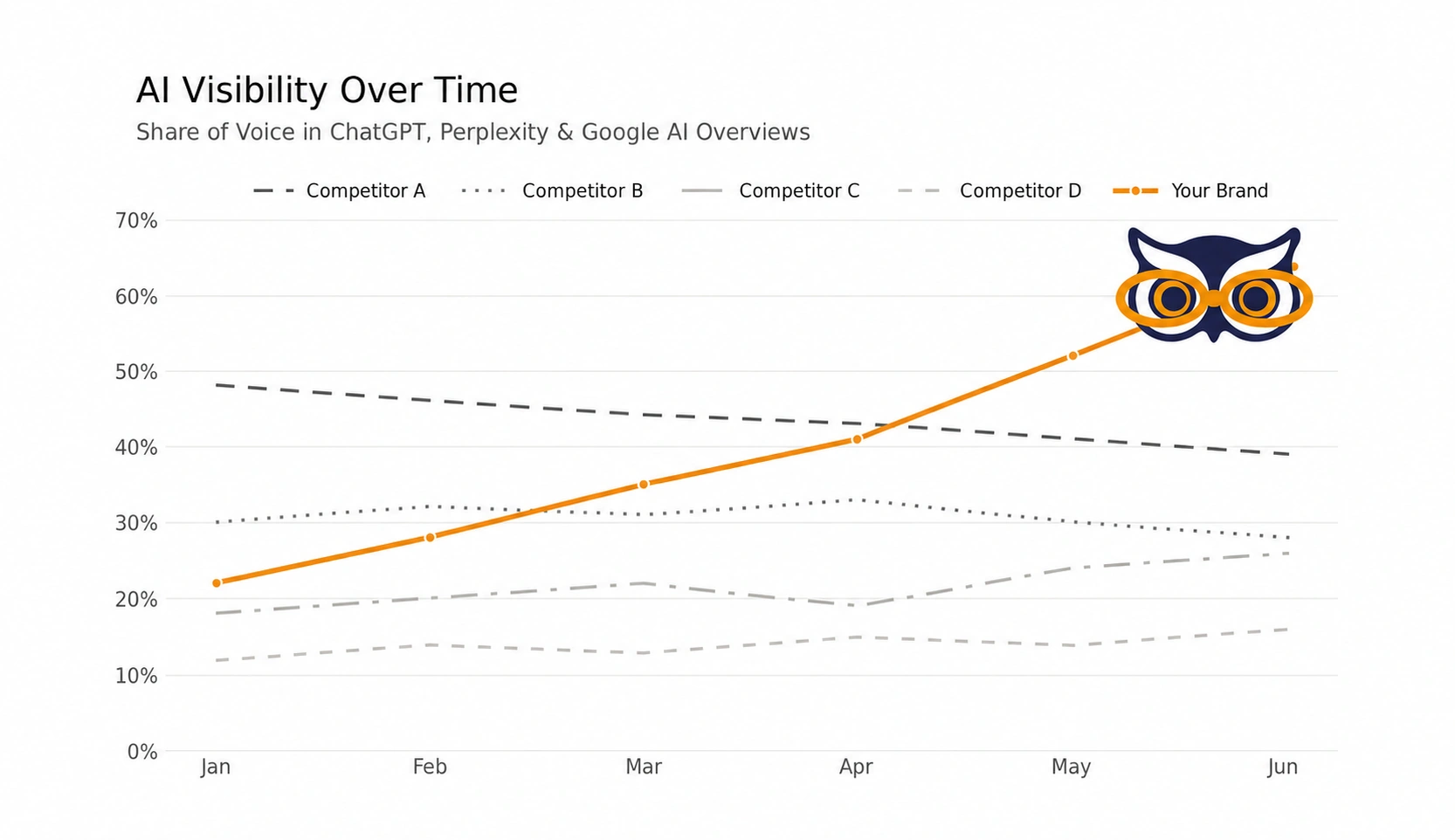
The way people search is changing fundamentally. Answers are increasingly generated directly in AI systems such as ChatGPT, Perplexity, Google AI Overviews and Gemini, without a classic search results page being opened or a website being clicked.
The forecasts are clear. According to Gartner, traditional search engine volume will decrease by 25 percent by 2026. By 2028, Gartner expects organic search traffic to websites to decline by 50 percent or more because consumers will use generative AI search.
At the same time, research shows that targeted optimization pays off. A study by Princeton University and Georgia Tech shows that Generative Engine Optimization can increase visibility in AI answers by up to 40 percent. Those who act now secure an advantage in a field that is only just taking shape.
The verified figures in detail
Up to 40% higher visibility in AI answers through Generative Engine Optimization.
Source: Aggarwal et al., Princeton University & Georgia Tech, KDD 2024
25% decline in traditional search engine volume by 2026.
Source: Gartner, Februar 2024
50% or more decline in organic search traffic to websites by 2028.
Source: Gartner, Predicts Search Marketing, zitiert über iO Digital
What is GEO?
Generative Engine Optimization explained simply
GEO stands for Generative Engine Optimization. It refers to the optimization of websites for AI-based search systems, generative search results and digital answer engines.
While classic SEO is mainly focused on being found well in search engines, GEO goes one step further. Content should be built so clearly, structurally and trustworthily that generative systems can correctly classify it, process it and potentially consider it as a relevant source.
GEO connects content, technology and semantics
GEO is not a single measure and not a short-term trick. A good GEO strategy connects several areas:
- clear and precise content
- clean page structure
- semantic headings
- structured data
- internal linking
- machine-readable information
- traceable expertise
- technical crawlability
- consistent company and service entities
The goal is a website that is helpful for people and clearly interpretable for digital systems.
Our GEO Services
GEO Scan
With the free GEO scan, you receive an initial assessment of how well your website is prepared for generative search systems, AI-based answers and classic search engines.
The check analyzes a representative sample of up to 50 public pages for crawlability, structured data, content clarity, trust signals, AI and search readiness, and multilingual signals.
The result shows your GEO score, visible strengths and areas that may require a closer analysis. The free scan does not replace a full GEO analysis.
GEO Analysis
With a GEO analysis, we examine how well your website is prepared for generative search systems, AI-based answers and classic search engines.
We analyze content, structure, technical signals, structured data, internal linking, entities and the answerability of your website.
The GEO analysis shows where your website is already strong and which optimizations make sense.
GEO Consulting
Our GEO consulting helps companies classify Generative Engine Optimization strategically and plan it in a meaningful way.
This is especially relevant before a website relaunch, for complex services, for multilingual websites or when internal teams need a clear basis for decision-making.
Learn more about GEO Consulting
GEO Implementation
During GEO implementation, the recommendations from the analysis are implemented directly on your website.
We optimize content, heading structures, FAQ sections, metadata, internal linking, structured data and technical foundations. The goal is a website that becomes clearer, more structured and easier for machines to understand.
Learn more about GEO Implementation
GEO Support
With GEO support, we secure the effect of your optimization over the long term, because generative search systems are constantly changing. We check your website in regular scans, monitor your visibility in AI systems, track external mentions and keep content and technical signals up to date. You receive an understandable report with before-and-after comparison and clear priorities, not just bare numbers.
Who is GEO suitable for?
Service providers and consulting companies
Service providers must clearly communicate which services they offer, which problems they solve and which target groups they are relevant for. GEO helps present this information more precisely and in a more structured way.
B2B companies and specialist providers
B2B websites often contain complex content. GEO helps organize topics, services, expertise and decision-making information better and prepare them in a machine-understandable way.
Companies with offers that require explanation
The more complex an offer is, the more important a clear digital structure becomes. GEO helps explain services more clearly and build relevant content in a more targeted way.
Companies with multilingual websites
For multilingual websites, it is especially important to align language, region, content, structure and technical signals cleanly. GEO can help better prepare international or regional visibility.
How we approach GEO
1. Analysis of the current website
First, we examine how your website is currently built. We look at content, page structure, technical foundations, internal linking, structured data and semantic signals.
2. Evaluation and prioritization
Then we evaluate which areas are particularly important and which optimizations should be implemented first. This creates a clear basis for meaningful decisions.
3. Implementation of the most important measures
Depending on the project, we optimize existing content, create new content areas, improve technical signals or implement structured data.
4. Further development of the website
GEO is not a one-time checklist. Websites should be developed continuously when new content, new services or new search habits emerge.
What a GEO-optimized website does better
It explains more clearly what your company offers
A GEO-optimized website makes services, target groups, specialist areas and benefits more visibly understandable.
It answers relevant questions more directly
Good GEO structures help answer concrete user questions directly, precisely and comprehensibly.
It strengthens trust and professional positioning
Expertise, experience and credibility must become visible on the website. GEO helps present these signals more clearly.
It improves machine understanding
Structured content, clean HTML semantics, internal linking and structured data help digital systems classify content better.
GEO and SEO belong together
GEO does not replace SEO
Generative Engine Optimization does not replace classic search engine optimization. SEO remains important for indexing, technical quality, rankings and organic visibility.
GEO expands this approach with semantic clarity, answerability, structured data and better understandability for generative search systems.
The difference lies in the focus
SEO asks: How is a website found in search engines?
GEO also asks: How is a website understood, classified and evaluated as a relevant source by AI systems?
Both perspectives are important for modern digital visibility.
GEO Knowledge
Foundations for better decisions
In our knowledge section, we explain the most important foundations around Generative Engine Optimization, AI search, structured data and website visibility.
The knowledge section offers orientation, but does not replace an individual analysis. Every website has its own content, its own technical requirements and its own target groups.
GEO scan
Check how ready your website is for generative search systems such as ChatGPT, Gemini, Perplexity and AI-powered Google results.
What the check looks at
GEO for Hotels
What does AI say when someone searches for a hotel in your region?
For hotels, we have a dedicated offer: GEO and the right local domain as one package.
Request a GEO Analysis
Find out how well your website is prepared
Would you like to know whether your website is well positioned for AI search systems, generative answers and modern search interfaces?
We analyze your website and show which technical, content-related and semantic optimizations make sense.
FAQ / Frequently Asked Questions about GEO
What does GEO mean?
GEO means Generative Engine Optimization. It describes the optimization of websites for AI-based search systems, generative search results and digital answer engines.
Is GEO the same as SEO?
No. GEO and SEO overlap, but they have different priorities. SEO focuses on classic search engines and rankings. GEO additionally focuses on the understandability of content for generative systems and AI-based answers.
Why does my website need GEO?
Because digital search is changing. Users ask more complex questions, AI systems give direct answers and websites must show more clearly what they are relevant for. GEO improves the foundation so that content can be better understood and classified.
Can GEO guarantee that my website appears in AI answers?
No. Serious GEO cannot promise guaranteed placements in AI answers. However, GEO improves the technical, content-related and semantic foundation of your website.
What is the first sensible step?
The first sensible step is a GEO analysis. It shows how well your website is currently prepared and which measures are truly relevant for your situation.
Is GEO only suitable for large companies?
No. GEO is also relevant for SMEs, service providers and specialized expert providers. Smaller and medium-sized companies in particular can benefit when their expertise is presented more clearly and structurally on the website.
Does a new website have to be created for GEO?
Not necessarily. Many websites can be improved through targeted optimization of existing content, technical signals and page structures. A relaunch only makes sense when the existing foundation is strongly limited.
What role do structured data play?
Structured data help search engines and digital systems understand content in a machine-readable way. They are an important part of GEO, but they do not replace high-quality content or a clear page structure.